Dental Implant Failure: What to Do When Work Done Abroad Fails
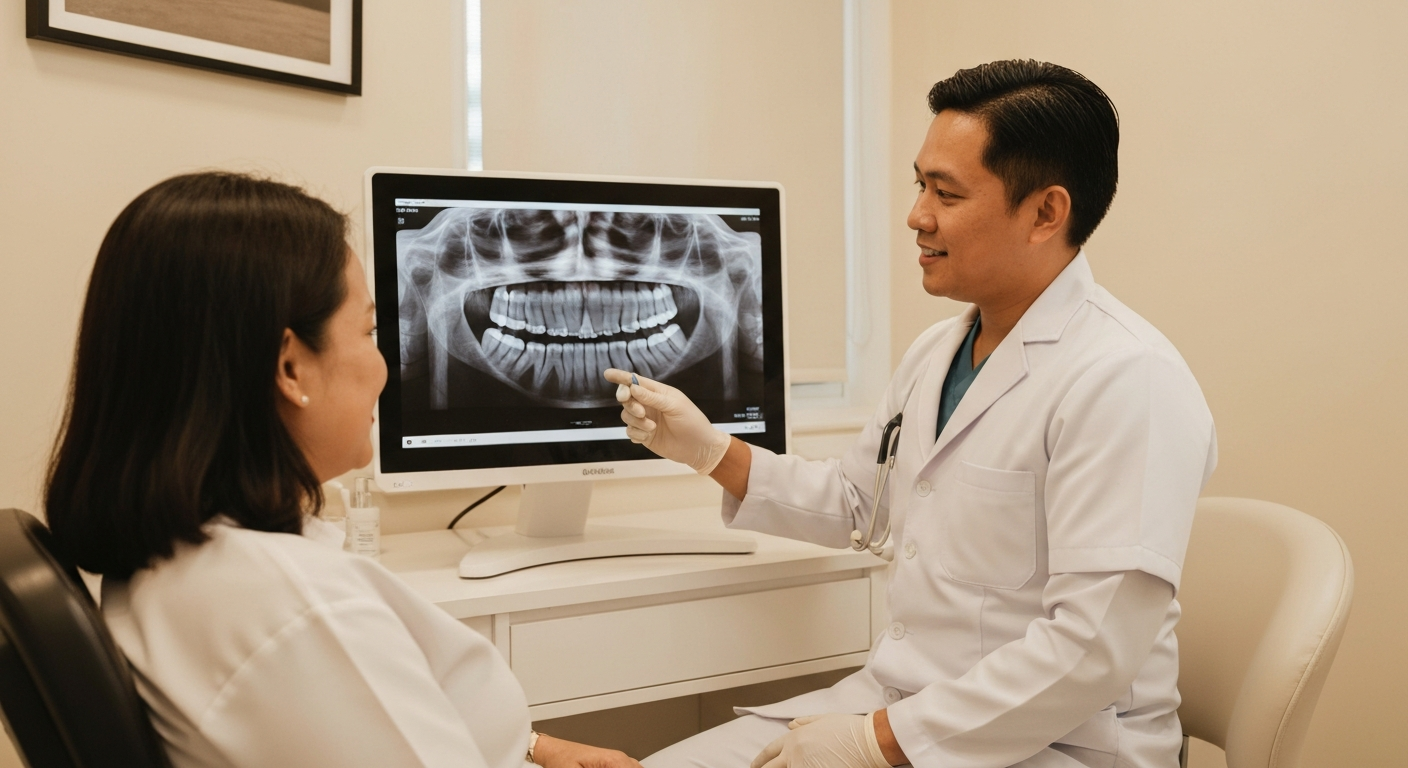
Quick Answer: A failed implant is a staged job, not an appointment. The fixture is removed, the site is left to heal, and it often needs grafting — ₱15,000–₱40,000 ($247–$658) in the Philippines — before a second one goes in. A clinic warranty normally covers the fixture and lab work at that clinic’s own chair, and almost never your flight. The cost picture is blunt: a redo at home is charged at home-market rates — US single-implant placement alone is $3,000–$6,000, before removal, grafting or imaging, for which we have no sourced US figure — and on one tooth that can wipe out the saving, but rarely on a full arch, where the gap is $6,580–$13,160 against $20,000–$35,000.
If you are reading this because something feels wrong with an implant you had done overseas, the first thing worth saying is that nothing on this page can tell you what is happening in your mouth. Only an examination and current imaging can do that. What this page can do is tell you how the process works from here, what the paperwork will and will not do for you, and what it costs — so you walk into that appointment knowing what you are dealing with.
Early failure and late failure are different problems
Implant failure splits into two patterns that behave completely differently for someone treated abroad. Early failure means the fixture never bonded to the bone in the first place. It tends to surface during the healing months or at the appointment where the final crown is fitted — which, for a two-trip patient, is often the second trip itself. That is inconvenient but it is the better version, because you are already sitting in the clinic that placed it.
Late failure happens to a fixture that integrated normally and worked for years, then loses its bone support or breaks mechanically. By then you are home, the warranty may have expired, and the clinic is a flight away.
Worth separating out: a loose abutment screw, a chipped crown or a fractured porcelain surface are prosthetic problems, not fixture failure. They are frequently fixable by a dentist where you live, provided that dentist can identify the system.
The signs that warrant an examination
Any of these means booking a dental appointment, not waiting to see how it goes. We are deliberately not going to tell you what they mean, because that is a diagnosis and it needs a clinician with your scan in front of them.
- The implant or the crown feels loose, or moves when you press it.
- Pain, throbbing or tenderness that begins after the site had already settled.
- Swelling, persistent bleeding or discharge from the gum around it.
- A change in how your bite feels on that side.
- Gum receding around the implant, or metal becoming visible.
The reason to get seen locally first, even if you fully intend to go back to the clinic that placed it, is that you need a diagnosis before you buy a flight. Booking travel on a guess is how people fly halfway around the world for a problem a local dentist could have solved in twenty minutes, or fly for a review when the case actually needed surgery.
What removing and replacing a failed fixture involves
A failed implant is removed, the site is left to heal, and in many cases the bone has to be rebuilt before a second fixture can be placed — so replacement is measured in months, not in a single visit. That timeline is the part patients are least prepared for.
Removal itself varies. A fixture that has not integrated may come out with little resistance. One that has partially integrated, or a late failure with an intact thread pattern, generally needs surgical removal, and that takes surrounding bone with it. What is left is a site that is wider, shallower or softer than the one the first implant went into.
That is why grafting comes up so often on the second attempt. A socket or ridge graft runs ₱15,000–₱40,000 ($247–$658) in the Philippines and a sinus lift ₱20,000–₱50,000 ($329–$823) — see the bone grafting and sinus lift guide for what each one is. Then the graft has to mature, then the new fixture has to integrate, then the crown is made. Realistically, expect the second attempt to take as long as the first course did, and quite possibly longer.
What an overseas warranty covers, and what it does not
A clinic warranty is a promise about parts and labour at that clinic’s own chair. Typically it covers the implant fixture and the lab work they supplied, replaced at their cost, for a stated number of years. That is genuinely worth having. What it almost never covers is your airfare, your accommodation, your time off work, or a bill from a dentist in your own country.
Before you sign anything, read for these specifically:
- What “replacement” includes. The fixture only, or also the removal, the imaging, any graft, and the new crown? These are separate line items and a warranty can quietly cover just one.
- What voids it. Missed reviews, smoking clauses, and — the common one — another dentist working on the same tooth.
- How a claim is made from abroad, and what evidence they will want.
Our what-if-it-goes-wrong guide covers the wider risk picture, and the questions to ask a clinic list has the wording to use while you still have leverage, which is before you pay.
a warranty that pays for the treatment but not the travel is not really a warranty against failure — it is a warranty against paying twice for the same implant. Those are different things. On a single-tooth case the flight can cost more than the implant it is being redone for, which means the clause you actually need is the one about who covers a remedial trip. Ask for that in writing before you book, accept that the usual answer is “you do”, and price your decision on that basis rather than on the number of years in the guarantee.
Who pays for the return flight
You do, in almost every case, and it is worth being unsentimental about it. The clinic is offering to redo the work for nothing; it is not offering to fly you there. Some clinics will discuss accommodation or a goodwill contribution when a case goes wrong, but that is a negotiation with a business, not a right you can enforce from another country.
This is the single biggest reason the arithmetic of dental tourism holds up on large cases and falls apart on small ones. A remedial trip costs the same as the original one, regardless of whose fault the failure was. If the treatment being redone is one tooth, the trip is worth more than the tooth. If it is a full arch, the trip is a rounding error against the sum at stake.
There is a middle route worth knowing about: some patients have the removal and healing done locally, then return to the original clinic only for the placement, so one flight does the work of two. Whether that is possible depends entirely on your case and on both dentists agreeing to it.
What a dentist at home needs before they will take the case
Bring the paperwork or expect resistance. A dentist cannot safely service a fixture they cannot identify, because abutments, screws, healing caps and drivers are specific to a brand and to a connection platform — they do not swap between systems. Without the brand, a straightforward repair becomes an exploratory one.
What to collect, ideally as email attachments before you leave the country:
- Implant brand, model, diameter and length for each fixture placed. Our implant brands guide explains why the system matters for parts availability years later.
- The batch or lot stickers from the implant packaging — the implant passport.
- Surgical notes, including any grafting, and the prosthetic components used.
- Pre-operative and post-operative radiographs, plus the CBCT files if a scan was taken.
- The itemised invoice and the signed warranty.
If you have already flown home without them, request them now rather than later — see sending dental records to and from the Philippines for how to ask and what format to request.
The honest cost picture
Here is the part nobody selling you a trip will put in writing. Remedial work at home-country rates can erase the saving on a single tooth. On a full arch it usually cannot, because the original gap is an order of magnitude larger.
| Procedure | Philippines | USA | You save |
|---|---|---|---|
| Replacement single implant + crown | ₱50k–150k ($822–$2,468) | $3,000–$6,000 | ~$2,900 |
| Bone graft (socket/ridge) before a second attempt | ₱15k–40k ($247–$658) | no sourced figure | — |
| Sinus lift, if the upper site needs one | ₱20k–50k ($329–$823) | no sourced figure | — |
| Panoramic X-ray for review imaging | ₱1,000–₱2,500 ($16–$41) | no sourced figure | — |
Replacement single implant + crown
Bone graft (socket/ridge) before a second attempt
Sinus lift, if the upper site needs one
Panoramic X-ray for review imaging
Philippine prices verified June 2026 from named clinics (how we verify). US single-implant figures are clinic and aggregator estimates; we hold no sourced US figure for grafts, sinus lifts or imaging, so those rows are left blank rather than guessed. Conversions at ₱60.79 = US$1.
Run it on one tooth. Say you paid roughly $1,500 in the Philippines and the replacement placement alone is done at home at the sourced US single-implant rate of $3,000–$6,000, with removal and any graft on top: you have now spent $4,500–$7,500 on one implant, against $3,000–$6,000 had you never travelled — before the original flights. Run it on an arch and the shape inverts. A Philippine arch is $6,580–$13,160 against $20,000–$35,000 in the US, and even paying US single-implant rates to replace one or two fixtures adds $3,000–$12,000 to your total. The saving narrows. It does not usually vanish. The full breakdown sits in the single implant cost guide.
Before you book
If you have not travelled yet, this page is really an argument about what to negotiate while you still can: the warranty wording, the records, and who pays for a remedial trip. Read is dental work in the Philippines safe? for the vetting method, and what if something goes wrong for the wider risk picture. If you already have a failed implant and want quotes for the second attempt, tell us what happened and we will match you with verified clinics — including the ones that will put the remedial terms in writing.
Sources
- Philippine prices (implants, grafts, sinus lift, panoramic X-ray): named-clinic price research by the team behind ClinicFinderPH, verified June 2026 — how we verify.
- US single-implant estimates ($3,000–$6,000) and US full-arch estimates ($20,000–$35,000): clinic and aggregator pricing; there is no open US fee survey we can cite, so treat these as indicative ranges.
- No US figures for grafts, sinus lifts or imaging: we could not source them, so those cells are marked “no sourced figure” rather than filled in.
- Early versus late failure, surgical removal, and the need to heal and often graft before a second placement: this is general clinical and market practice as described by implant clinics, not a citable study or guideline document. Your own surgeon’s assessment of your site overrides all of it.
- Warranty scope (fixture and lab work at the issuing clinic; travel excluded) and the records set a receiving dentist needs: general market practice observed across clinic warranty documents and treatment records during ClinicFinderPH verification, not a published standard.
- Exchange rate (₱60.79 = US$1, mid-market): ECB reference rate via Frankfurter, 12 June 2026.
FAQ
How soon after surgery does an implant fail?
There are two patterns. Early failure means the fixture never bonded to the bone, and it tends to surface during the healing months or at the appointment where the final crown is fitted. Late failure happens to a fixture that integrated normally and served for years, and shows up long after you are home. The two are different problems with different fixes, and only an examination tells you which one you have.
What should I do first if I think my implant is failing?
Get examined by a dentist where you live, before you buy a flight. You need a diagnosis and current imaging before anyone can tell you whether this is a loose component, a gum problem or the fixture itself. At the same time, email the overseas clinic, tell them what is happening and ask them to send your full treatment record. Do not wait to see whether it settles on its own.
Can a dentist at home remove an implant placed in the Philippines?
Usually, though a general dentist may refer you to an oral surgeon or periodontist for the removal itself. The practical requirement is identification: they need the implant brand, model, diameter and length, plus the batch labels and the original radiographs. Components are not interchangeable between systems, so a fixture nobody can identify is much harder and more expensive to deal with.
Does a Philippine clinic's warranty cover a failed implant?
A written clinic warranty typically covers the fixture and the lab work that clinic supplied, replaced at their own chair at their cost. It rarely covers your flights, accommodation or time off work, and it usually does not cover treatment carried out by another dentist. Most warranties also carry conditions such as attending reviews and maintaining hygiene. Read the document before you fly, not after.
Will I need a bone graft before a second implant?
Often, and the site decides it, not a rule. Removing a failed fixture can take bone with it, so the ridge may need rebuilding before a second attempt has anything to anchor into. In the Philippines a socket or ridge graft runs ₱15,000–₱40,000 (about $247–$658) and a sinus lift ₱20,000–₱50,000 ($329–$823), verified June 2026. Your surgeon decides from the scan.
Who pays for the return flight if the work has to be redone?
You do, in almost every case. A clinic warranty is a promise about treatment, not about travel. Some clinics will discuss accommodation or a contribution as goodwill, but that is a negotiation rather than an entitlement, and it should never be assumed. Ask the question before you book the original treatment and get the answer written into the quote.
Does one failure wipe out the saving from treating abroad?
On one tooth, it can. A single implant in the Philippines is ₱50,000–₱150,000 ($822–$2,468) against $3,000–$6,000 in the US, so paying US rates for a remedial implant leaves you spending more than if you had never travelled. On a full arch the gap is far larger — $6,580–$13,160 against $20,000–$35,000 — so remedial work narrows the saving rather than erasing it.
What records should I ask for before I fly home?
An itemised treatment record, the implant brand, model, diameter and length for every fixture, the batch or lot stickers from the implant packaging, pre-operative and post-operative radiographs (and the CBCT files if one was taken), a list of the prosthetic components used, and the signed warranty. Ask for it all as email attachments, so it exists somewhere other than your luggage.
This is general information, not medical advice. Smile Philippines is an independent directory and guide, not a dental provider. Prices are indicative ranges, verified June 2026 — confirm the current price and your treatment plan directly with a licensed dentist. See our full disclaimer.
Want clinic recommendations + a quote?
Tell us what you need — we'll match you with 2–3 verified clinics and reply within 48 hours.
Get a Free Quote →