Is Dental Work in the Philippines Safe? An Honest Guide From a Local
Quick Answer: Dental work in the Philippines is safe — when you choose the clinic carefully. Philippine dentists are licensed by the Professional Regulation Commission (PRC), good clinics use the same global implant brands as Western ones, and English is standard. The real variable is the clinic, not the country — so this guide is mostly about how to vet one before you fly.
“Is it safe?” is the question every reader actually has, and most dental-tourism sites answer it like a salesperson. Here’s the honest version, from someone based in Cebu: yes, with caveats you can control. The difference between a great outcome and a horror story is almost never “the Philippines” — it’s which clinic you walked into. Let’s make sure you walk into a good one.
Are Philippine dentists actually qualified?
Yes. A dentist in the Philippines must complete a Doctor of Dental Medicine degree, pass the national licensure exam, and hold a current licence from the Professional Regulation Commission (PRC) — the government body that regulates the profession. Many belong to the Philippine Dental Association. Implant and cosmetic specialists typically train further, often internationally.
Two things work in a foreign patient’s favour: English is a working language of Philippine dentistry, and the country has a deep pool of dentists, which keeps standards competitive at the top end.
Do clinics use the same materials?
Good ones use the exact same brands you’d get at home. The implant systems in use here are global names:
- Korean: Osstem, Dentium
- Israeli: MIS, Adin
- American: Zimmer, BioHorizons
- Swiss/German: Straumann, Nobel Biocare
The crown and veneer materials — zirconia, e.max, porcelain — are likewise the same materials used worldwide. The lower price is about labour and overhead, not cheaper parts. Ask which implant brand your quote uses. A clinic that can’t or won’t name it tells you something.
How to vet a clinic before you fly
This is the part that actually keeps you safe. Run this checklist:
- PRC licence — confirm the lead dentist is licensed and in good standing, using PRC’s public verification lookup.
- Reviews, including the bad ones — read recent Google reviews and specifically check the 1-star reviews for patterns (pain ignored, work redone, billing surprises).
- Implant brand in writing — get the specific system named on your quote.
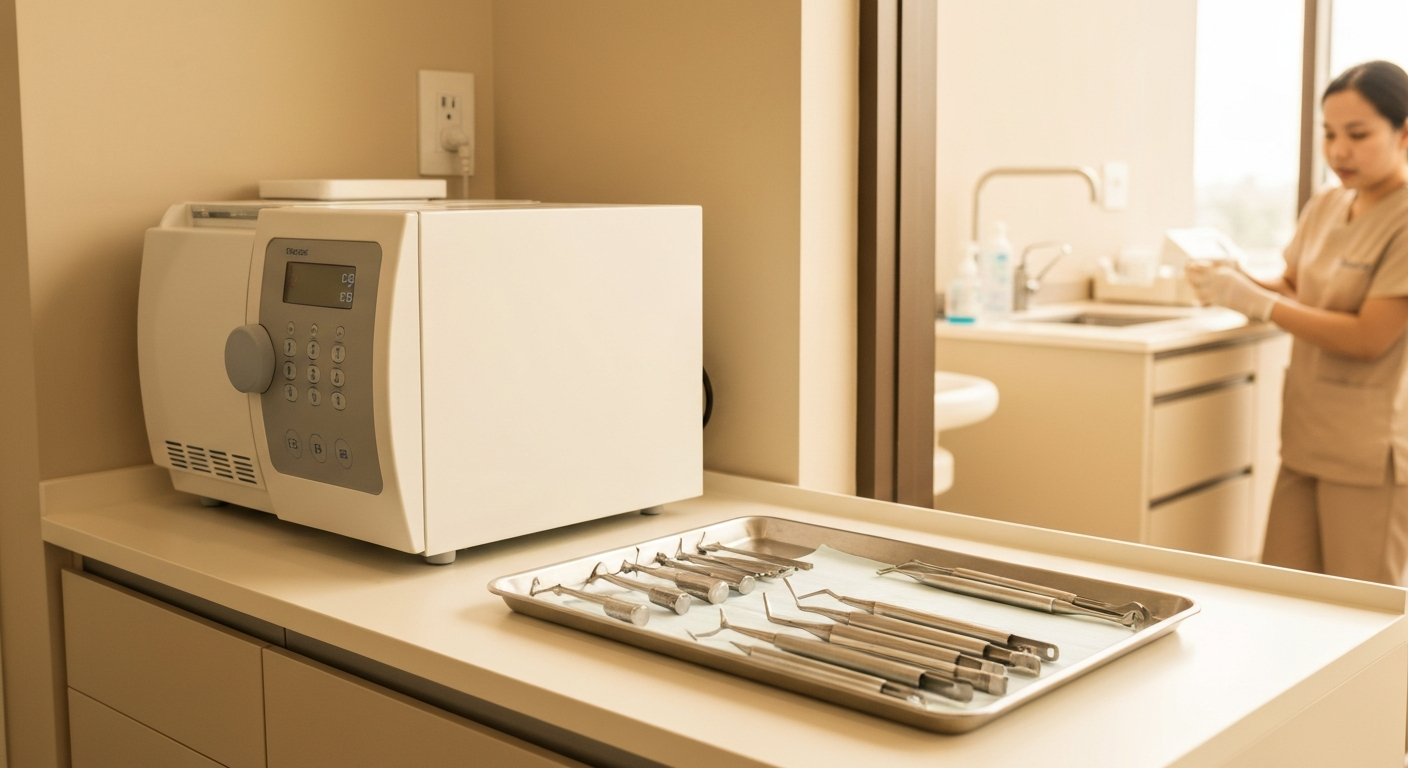
- Sterilisation — ask how instruments are sterilised (autoclave) and whether needles and barriers are single-use.
- Itemised quote + warranty — a written breakdown of what’s included, and a clear warranty on implants and major work.
- Follow-up plan — ask directly: “What happens if there’s a problem after I fly home?”
the single biggest dental-tourism risk isn’t the surgery — it’s follow-up care. A loose crown or a bite that needs adjusting is trivial when your dentist is across town and a real headache when they’re a flight away. Choose clinics with warranties, build a buffer day or two into your trip for a check, and keep every x-ray and receipt.
Red flags to walk away from
- Pressure to decide quickly or pay a large deposit before you’ve consulted.
- Refusal to name the implant brand or put the quote in writing.
- No visible credentials, or a dentist you can’t identify by name.
- Reviews that are all five stars with no specifics.
- A price dramatically below every other clinic — in implants, too cheap usually means a no-name fixture or a corner cut.
The bottom line
The Philippines has clinics that rival anywhere in the world and clinics you should avoid — same as every country. Your job isn’t to judge “the Philippines”; it’s to judge the clinic. Do the checks above and the safety question largely answers itself.
We do a version of these checks before listing any clinic — see how we verify and our verified clinics. When you’re ready, the enquiry form matches you with clinics that pass them. For costs, start with the Philippine dental price list.
For the category-level picture — what dental tourism saves, where the risks really sit, and when to stay home — see the dental tourism guide.
Three pages go deeper on the specifics: what happens on day one at a Philippine clinic, sterilisation and infection control standards, and the honest counterweight — when not to fly for dental work.
Sources
- Dentist licensing: Professional Regulation Commission (PRC), Philippines — prc.gov.ph. Professional body: Philippine Dental Association — pda.org.ph.
- Implant systems referenced are the manufacturers’ own global product lines (Straumann, Nobel Biocare, Osstem, Dentium, MIS, Adin, Zimmer, BioHorizons).
- Clinic vetting method: how we verify, the same process behind ClinicFinderPH’s 21,000+ listing directory.
FAQ
Are Philippine dentists qualified?
Yes. To practise, a dentist must complete a Doctor of Dental Medicine degree, pass the national board exam, and hold a current licence from the Professional Regulation Commission (PRC). Many also belong to the Philippine Dental Association. English is a working language of Philippine dentistry, and specialists (implantologists, prosthodontists) train to international standards.
Do Philippine clinics use the same materials as the US or Australia?
Good clinics do. The implant brands used here — Osstem and Dentium (Korea), MIS and Adin (Israel), Zimmer and BioHorizons (US), Straumann and Nobel Biocare (Switzerland/Germany) — are the same systems sold worldwide. Ask which brand your quote uses; a clinic that can't name it is a red flag.
How do I check a clinic is legitimate before I fly?
Verify the lead dentist's PRC licence, read recent Google reviews (including the 1-star ones), confirm the implant brand in writing, ask about sterilisation (autoclave, single-use items), and get an itemised quote and a warranty policy in writing. A clinic used to foreign patients will answer all of this quickly and in English.
What's the real risk of getting dental work abroad?
The treatment itself, at a good clinic, carries similar risks to anywhere. The distinct risk of dental tourism is follow-up: if something needs adjusting after you fly home, your clinic is hours away by plane. Mitigate it by choosing clinics with warranties, planning enough time in-country for checks, and keeping all records.
Is the water and infection control safe at Philippine dental clinics?
Reputable clinics use autoclave sterilisation, single-use needles and barriers, and treated water lines — the same infection-control basics as Western clinics. Standards vary between clinics, not because of the country, so ask specifically how instruments are sterilised. Any clinic should be happy to explain.
What are the warning signs of a clinic to avoid?
Pressure to decide fast or pay large deposits upfront; refusal to name the implant brand or put the quote in writing; no visible PRC credentials; only glowing reviews with no detail; and prices that are dramatically below everyone else. Honest clinics are transparent and unhurried.
This is general information, not medical advice. Smile Philippines is an independent directory and guide, not a dental provider. Prices are indicative ranges — confirm the current price and your treatment plan directly with a licensed dentist. See our full disclaimer.
Want clinic recommendations + a quote?
Tell us what you need — we'll match you with 2–3 verified clinics and reply within 48 hours.
Get a Free Quote →