PFM vs Zirconia Crowns in the Philippines: Which Should You Actually Pay For?
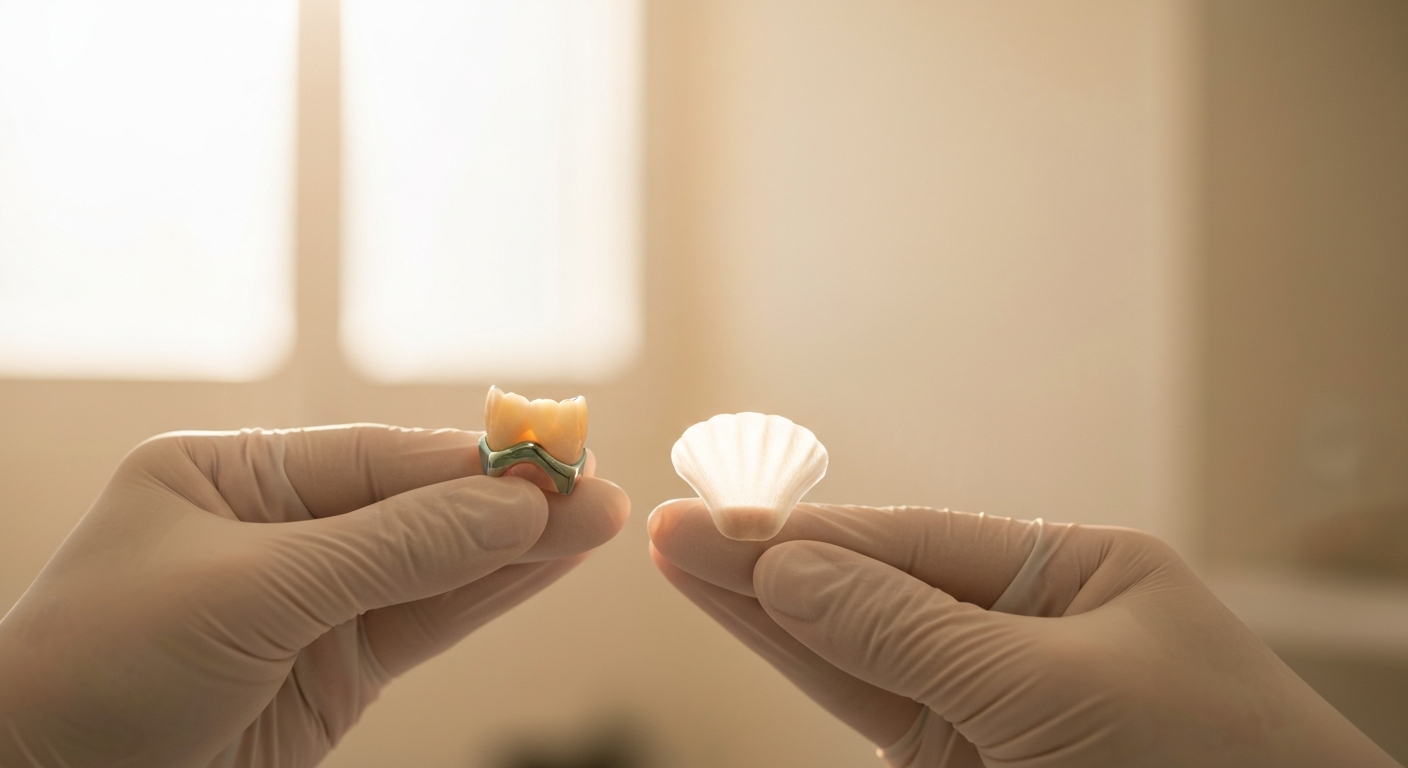
Quick Answer: In June 2026 a PFM crown costs ₱8,000–₱15,000 (about US$132–$247) per tooth in the Philippines and a zirconia crown ₱15,000–₱25,000 (about US$247–$411). The gap is ₱7,000–₱10,000 (US$115–$165) per tooth — trivial on one crown, ₱140,000–₱200,000 (US$2,303–$3,290) across a 20-unit full-mouth case. PFM’s two known weak points are a dark line at the gumline once the gum recedes, and porcelain chipping off the metal core. Zirconia in its full-contour form has neither. That matters more to you than to a local patient, because your repair appointment is a flight.
This is a decision, not a materials lecture. Both crowns are made in the same Philippine labs, fitted by the same dentists, and cost a fraction of what you would pay at home. What follows is what you are actually buying with the difference, and the specific cases where paying it is a waste of money.
What actually separates the two
A PFM crown is a metal shell with tooth-coloured porcelain fired over it: the metal supplies the strength, the porcelain supplies the look. A zirconia crown is one ceramic material, zirconium dioxide, with no metal inside it at all. Every argument between the two comes back to that single structural difference.
Because a PFM has two materials bonded together, it has an interface — and interfaces are where things separate. Because it has metal, it blocks light rather than transmitting it the way a natural tooth does, and it has a metal edge at the margin. Zirconia comes in two forms, and the distinction matters more than the brand name: full-contour (monolithic) zirconia is solid ceramic throughout, while layered zirconia has porcelain fired over a zirconia core for a more natural surface. Layered zirconia buys appearance and reintroduces the layered construction. Ask which one a quote assumes.
The dark line at the gumline
This is the PFM problem most people have actually seen, usually on a parent or a colleague: a thin grey or dark band where the crown meets the gum. It comes from the metal shell, which ends at the crown’s margin.
While the gum covers that margin, nothing shows and the crown looks fine — often for many years. Gums recede over time, though, and when the margin is exposed the metal edge reads as a dark line against the tooth and against the gum tissue above it. Nothing has failed. The crown is intact and functional, and a dentist will usually tell you it does not need replacing. It simply looks wrong, and the only way to remove the line is to remake the crown.
Zirconia has no metal shell, so there is no dark edge waiting to be exposed. On a front tooth in a visible smile line, that is the clearest single argument for spending the extra ₱7,000–₱10,000. On a lower molar nobody sees, it is close to irrelevant.
Chipping, and which crowns are exposed to it
Porcelain fired over a core can chip off it. That applies to PFM, and it applies equally to layered zirconia, because both are the same sandwich with a different filling. Full-contour zirconia has no separate porcelain layer, so the classic chip has nothing to chip off.
A chip is not always a disaster — a small one on a non-functional surface can sometimes be smoothed, and a larger one usually means a remake. Whether it happens at all depends on your bite, whether you grind, how much clearance the dentist had to work with, and the lab’s execution, which is why nobody can honestly give you a percentage. What can be said plainly is the structural point: fewer bonded layers means fewer places for a bond to fail. If you want to reduce the number of ways a crown can need attention, monolithic zirconia removes one of them outright.
What zirconia gives you, and what it costs you
Zirconia’s advantages are metal-free construction, no dark margin, high fracture strength in its full-contour form, and good tolerance in the mouth — it is the reason it took over so much of the crown market. It is also the sensible choice for anyone who reacts to the base-metal alloys used in some PFM copings.
It has genuine trade-offs, and clinics that pretend otherwise are selling. Older full-contour zirconia was noticeably opaque, which is why heavily-layered or high-translucency blocks exist now and why the top of the price range sits where it does. Zirconia is also a hard material, and its effect on the opposing natural teeth over the long term is a live discussion among dentists rather than a settled one; the surface finish the lab and dentist leave on it is part of that. And a zirconia crown that does fracture cannot be repaired in the mouth the way a small porcelain chip sometimes can.
The price gap, per tooth
Per tooth the difference is small enough that it should not decide a single-crown case: ₱7,000 at the bottom of both ranges and ₱10,000 at the top, or roughly US$115–$165. Here are the Philippine crown prices we verified in June 2026, by material.
| Crown type | Philippines | At home | You save |
|---|---|---|---|
| PFM (porcelain-fused-to-metal) | ₱8,000–₱15,000 ($132–$247) | no sourced figure | — |
| Zirconia | ₱15,000–₱25,000 ($247–$411) | no sourced figure | — |
| E.max (lithium disilicate) | ₱15,000–₱25,000 ($247–$411) | no sourced figure | — |
| Full porcelain / all-ceramic | ₱12,000–₱20,000 ($197–$329) | no sourced figure | — |
| Metal / gold | ₱5,000–₱15,000 ($82–$247) | no sourced figure | — |
PFM (porcelain-fused-to-metal)
Zirconia
E.max (lithium disilicate)
Full porcelain / all-ceramic
Metal / gold
Philippine prices verified June 2026 from named clinics (how we verify), converted at ₱60.79 = US$1. We hold no independently verified home-market fee for PFM or zirconia specifically, so those cells say so rather than guessing — the general Western crown figures we do have sit on the crown cost guide. The top of the zirconia range rises above ₱25,000 at premium Manila clinics using imported or multi-layered blocks.
What the gap becomes across a full-mouth case
Multiply it and the decision changes character completely, which is why this question is worth arguing about at all. Do the arithmetic on your own unit count before you choose.
- One tooth: PFM ₱8,000–₱15,000, zirconia ₱15,000–₱25,000. Extra: ₱7,000–₱10,000 (US$115–$165).
- A 12-unit arch: PFM ₱96,000–₱180,000 (US$1,579–$2,961), zirconia ₱180,000–₱300,000 (US$2,961–$4,935). Extra: ₱84,000–₱120,000 (US$1,382–$1,974).
- A 20-unit full mouth: PFM ₱160,000–₱300,000 (US$2,632–$4,935), zirconia ₱300,000–₱500,000 (US$4,935–$8,225). Extra: ₱140,000–₱200,000 (US$2,303–$3,290).
At 20 units the material choice alone costs more than the flights, so it deserves a proper conversation with the dentist rather than a box ticked on a quote. It also explains why a clinic’s headline “full mouth of crowns” price can differ so much from another’s: they may not be quoting the same material. Compare the case totals on the full-mouth restoration guide with your unit count in front of you.
When PFM is still the right answer
PFM is not the budget consolation prize, and there are three situations where choosing it is simply correct rather than a compromise.
Back teeth you cannot see. The dark-margin problem is a cosmetic one, and it cannot be cosmetic on a tooth nobody looks at. On lower molars the money is usually better spent elsewhere in the treatment plan.
A budget that has to stretch across more teeth. Eight PFM crowns finished properly beat five zirconia crowns and three teeth left waiting for a second trip. Coverage beats material.
Matching existing PFM work. A new crown has to live next to what is already in your mouth. A single bright zirconia unit in a run of older PFM can stand out more than the older crowns ever did.
Your dentist decides which of these applies after examining you and seeing your bite — the point here is only that “cheaper” and “worse” are not the same word.
Why this weighs differently when you have flown
At home, a chipped crown is an inconvenience: you ring the practice, you go in, it gets sorted. Two thousand miles away it is a decision about whether to fly. That single fact should shift your material choice toward durability more than it would if you lived down the road from the clinic.
It shifts three things in practice. Ask what the warranty covers and whether it pays for a remake without a return trip. Get the material named in writing on the quote, including whether zirconia means monolithic or layered, because a dentist at home cannot service what they cannot identify. And front-load the fit: the final adjustment on a crown is the appointment people skip when a flight looms, and it is the one that decides whether the bite feels right for the next decade.
the honest ranking is not “zirconia good, PFM bad”. It is that the layered construction is what fails, and both PFM and layered zirconia have it. If durability is what you are buying, full-contour zirconia is the material that removes the failure mode, and paying zirconia prices for a layered crown on a back tooth gets you the higher bill without the structural benefit. Ask the clinic which one they are quoting. If the answer is vague, that is your signal — the same signal as a clinic that will not name an implant brand.
Before you book
Read the crown cost guide for the full material range and how crowns compare with veneers, check the 2026 Philippine price list so you can price your whole case rather than one tooth, and take the questions to ask a clinic abroad to your video consultation — the material question belongs on that list. If you want to know what happens when a crown needs redoing after you are home, we cover it in what if it goes wrong. When you are ready, send your case through the enquiry form and we will match you with verified clinics.
Sources
- Philippine crown prices (PFM ₱8,000–₱15,000; zirconia ₱15,000–₱25,000; e.max ₱15,000–₱25,000; full porcelain ₱12,000–₱20,000; metal/gold ₱5,000–₱15,000): named-clinic price research by the team behind ClinicFinderPH, verified June 2026 — how we verify.
- Case totals (12-unit and 20-unit figures): our own arithmetic on the verified per-tooth ranges above, not quoted prices. Real quotes vary with unit count, lab, and whether any teeth need work before the crown.
- Home-market PFM and zirconia prices: we hold no independently verified fee for either material in the US, UK, Australia or elsewhere, which is why the comparison column says so. The general Western crown figures we do have are cited on the crown cost guide.
- How PFM and zirconia crowns are built (metal coping with fired porcelain; monolithic versus layered zirconia): standard dental-laboratory construction, described here as general practice rather than from a citable document.
- Dark margins after gingival recession, porcelain chipping at the layer interface, opacity of earlier full-contour zirconia, and wear on opposing teeth: general clinical and laboratory experience as described by dentists and dental labs. These are well-known material behaviours, not findings we are quoting from a specific study, and we give no rates or percentages because we have none we can source.
- Exchange rate (₱60.79 = US$1, mid-market): ECB reference rate via Frankfurter, 12 June 2026. Confirm before you pay.
FAQ
What is the difference between a PFM and a zirconia crown?
A PFM crown is built on a metal shell with tooth-coloured porcelain fired over it, so the strength comes from the metal and the appearance from the porcelain. A zirconia crown is a single ceramic material, zirconium dioxide, with no metal inside it. That one structural difference drives everything else people argue about: the grey line at the gum, the chipping, the light transmission, and the price.
How much do PFM and zirconia crowns cost in the Philippines?
In June 2026, PFM runs ₱8,000–₱15,000 per tooth (about US$132–$247) and zirconia ₱15,000–₱25,000 (about US$247–$411). The gap is ₱7,000–₱10,000 per tooth, roughly US$115–$165. The top of the zirconia range rises further at premium Manila clinics using imported or multi-layered blocks, so ask which block your quote assumes.
Why do PFM crowns show a dark line at the gum?
The metal shell inside the crown stops at the margin, where the crown meets the tooth. While the gum sits over that margin nothing shows. If the gum recedes over the years, the margin is exposed and the metal edge reads as a grey or dark line against the tooth. Zirconia has no metal shell, so there is no dark edge to expose.
Does zirconia chip?
Full-contour, or monolithic, zirconia is one solid material with no porcelain layer to break off, so the classic chip does not apply to it. Layered zirconia, which has porcelain fired over a zirconia core for a better appearance, can chip in the same way a PFM can, because it has the same layered construction. Ask your dentist which of the two your quote covers.
Is zirconia worth the extra money for back teeth?
That depends on your case rather than on the material league table, and it is a question for the dentist examining you. Back teeth take the heaviest chewing load and are the least visible, which is why PFM keeps its place there. The strongest arguments for zirconia at the back are heavy grinding and a preference for avoiding metal, not appearance.
Can I mix PFM and zirconia in the same mouth?
Yes, and it is common. Many patients put zirconia on the teeth that show when they smile and PFM further back, which controls cost without the visible compromise. The catch is shade matching: two different materials from two different labs can read slightly differently in daylight, so tell the clinic up front that the case is mixed.
What if I already have PFM crowns?
Matching existing work is a real reason to stay with PFM. A new crown next to older PFM crowns has to sit alongside their shade and their light behaviour, and a single bright zirconia unit in a run of PFM can stand out more than the old crowns do. If you are replacing the whole run in one go, that constraint disappears.
Which should a dental tourist choose?
Weigh it differently than you would at home, because a repair is not a short drive away. On a single back tooth the ₱7,000–₱10,000 saving on PFM is real money and the risk is contained. On a large case that you have flown for, spending the extra on the material with fewer things to go wrong buys you fewer reasons to book another flight.
This is general information, not medical advice. Smile Philippines is an independent directory and guide, not a dental provider. Prices are indicative ranges, verified June 2026 — confirm the current price and your treatment plan directly with a licensed dentist. See our full disclaimer.

Want clinic recommendations + a quote?
Tell us what you need — we'll match you with 2–3 verified clinics and reply within 48 hours.
Get a Free Quote →