Partial Dentures in the Philippines: Costs, Types and the Trip Problem
Quick Answer: A partial denture in the Philippines costs ₱5,000–₱12,000 (about US$82–$197) in acrylic, ₱8,000–₱20,000 ($132–$329) flexible, and ₱12,000–₱25,000 ($197–$411) as a cast-metal framework, verified June 2026. The build normally fits one trip of one to two weeks. The catch is not the price or the lab time — it is that a partial is fitted, then adjusted, and the adjustment happens days after you start eating with it. Fit one on the last afternoon of a holiday and you will fly home with an appliance nobody has finished.
Partials are the least glamorous thing on a Philippine price list and one of the most useful. They are also the appliance most likely to go wrong for a visitor, for a reason that has nothing to do with the standard of dentistry. This page covers what each type is, what the clasps look like, how many visits it really takes, and where a partial sits against a bridge or an implant for the same gap.
What partial dentures cost in the Philippines
Three types, three price bands, all verified from named clinics in June 2026. Prices are per appliance, and the number of teeth being replaced moves you within the band rather than between them.
| Type of partial | Philippines | Your home market | You save |
|---|---|---|---|
| Acrylic partial denture | ₱5,000–₱12,000 ($82–$197) | no sourced figure | — |
| Flexible partial (Valplast / TCS type) | ₱8,000–₱20,000 ($132–$329) | no sourced figure | — |
| Cast metal framework partial | ₱12,000–₱25,000 ($197–$411) | no sourced figure | — |
Acrylic partial denture
Flexible partial (Valplast / TCS type)
Cast metal framework partial
We publish verified Philippine prices; we do not hold verified denture prices for the US, UK, Australia, Canada or anywhere else, so we have left the home-market column empty rather than repeat a number we cannot stand behind. The saving is large in percentage terms in every market we know of, but we will not put a figure on it. Full context sits in the denture cost guide and the 2026 Philippine price list.
Acrylic, flexible or cast metal: what the money buys
The three types are genuinely different appliances, not three grades of the same thing. Price tracks the material and the lab work, not the number of teeth.
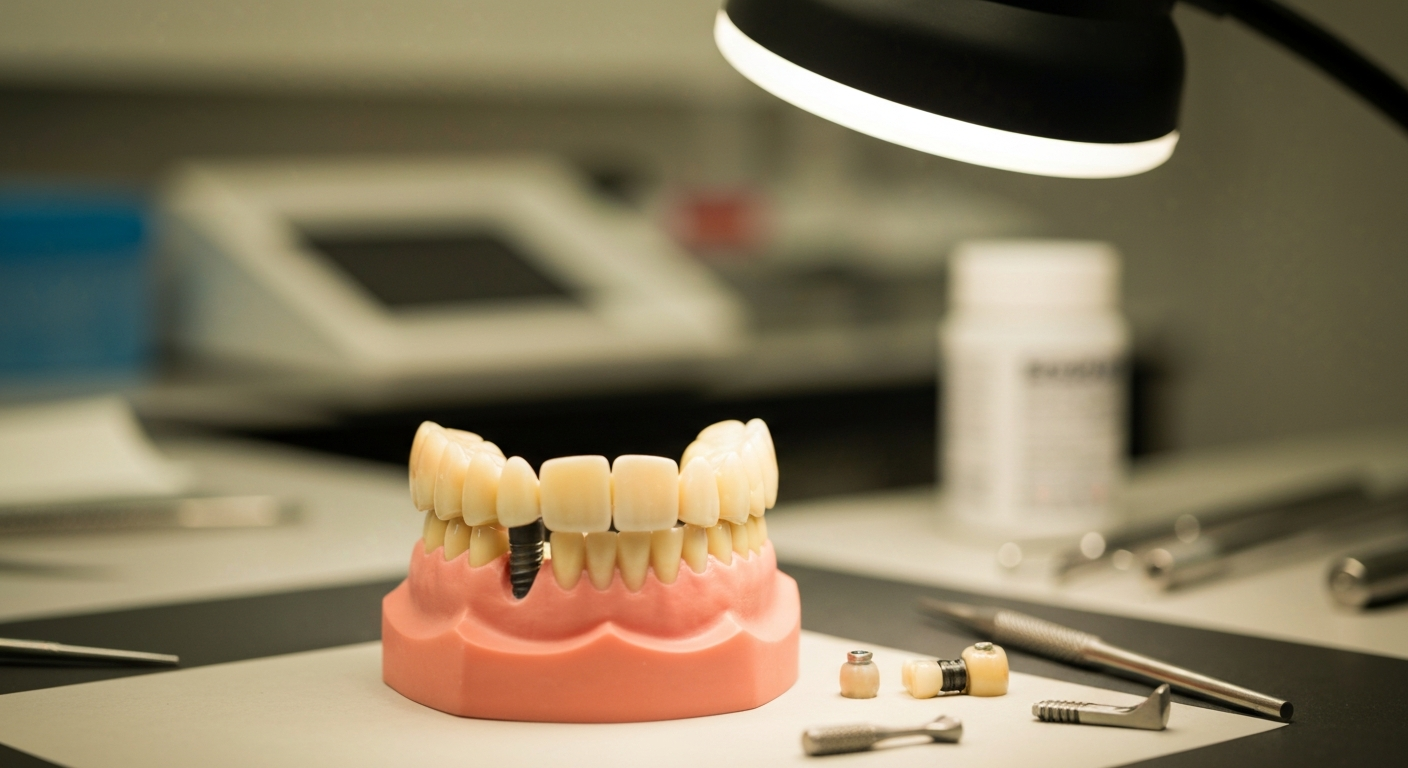
- Acrylic (₱5,000–₱12,000). A pink acrylic plate carrying the false teeth, usually held in place by bent stainless-steel wire clasps. It is the thickest and bulkiest of the three, and the easiest to modify: teeth can be added to it later, and it can be relined as the gum changes shape. That adaptability is why it is so often the first partial someone gets.
- Flexible (₱8,000–₱20,000). Moulded from a nylon-type thermoplastic, sold under names like Valplast and TCS. Thin, light, and the clasps are gum-coloured, so nothing metal shows when you smile. The trade-off is servicing, which we come back to below.
- Cast metal framework (₱12,000–₱25,000). A slim cobalt-chrome skeleton with acrylic and teeth attached. It rests on prepared surfaces of the remaining teeth, so the load goes partly onto them instead of entirely onto the gum. Thinnest in the mouth, most rigid, most demanding of a precise fit.
Clasps, and how much metal actually shows
How visible your partial is comes down to the clasps, and to where the gap is. A partial replacing back teeth can carry metal clasps that essentially nobody sees. A partial replacing an upper front tooth or a premolar is a different conversation, because a wire crossing a visible tooth is visible.
That is the whole commercial case for flexible partials: the retention comes from gum-coloured nylon hooking over the teeth, with no metal in the picture. Acrylic partials use bent wire, positioned wherever the dentist can get grip. Cast-metal partials use designed metal clasps, and a good design will hide them as far as the anatomy allows, but the framework is metal and metal has a colour.
If appearance is the deciding factor for you, say so at the consultation and ask to see the clasp positions marked on the model at the try-in stage, before the appliance is finished. Changing a clasp design at the wax stage is routine. Changing it afterwards means remaking.
How many appointments a partial actually takes
Plan on four or five visits, spread across one to two weeks, with lab turnaround setting the pace rather than chair time.
The usual sequence runs: impressions of both arches; a bite registration so the lab knows how your jaws meet; a wax try-in where the teeth are set in wax and you get to look at them and say no; the fitting, where the finished partial goes in and gets its first adjustments; and then a review a few days later. Cast-metal frameworks often add a visit, because the metal skeleton is usually tried in on its own before the teeth are added to it.
None of these visits is long. The problem is that they cannot be compressed much: the lab needs real hours between each one, and the try-in exists precisely so that mistakes get caught while they are still cheap to fix. A clinic offering to do the whole thing in two days is offering to skip a step.
Why the adjustment visits are the problem for a visitor
Here is the part the brochures skip. A partial denture is not finished when it is fitted. It is finished after you have eaten with it for several days, found the spots where it rubs, and gone back to have those spots eased.
Sore spots are normal, they are not a sign of bad work, and they are located by you, at home, with food, not by the dentist in the chair. That means the appliance genuinely needs a return visit three to seven days after fitting, sometimes two. For a resident that is a minor inconvenience. For someone on a two-week trip whose denture was fitted on day twelve, it is a problem with no good solution: you either change your flight or you fly home with an unfinished appliance and start paying a dentist at home to finish it.
of all the work on this site, removable dentures are the one that travels worst. Implants and crowns are handed over finished. A partial is handed over roughly right and then tuned over the following fortnight, and that tuning is not optional — an appliance that rubs gets left in a drawer. If you are flying in for dental work, either build the trip so the partial is fitted with a week still to run, or accept in advance that you will pay someone at home to adjust it. A partial fitted the day before your flight is not a bargain.
Relining, repairs and how long a partial lasts
A partial is a removable appliance that needs servicing, not a fit-and-forget restoration, and the servicing question differs sharply by material.
The gum and bone under a denture change shape over time, and they change fastest in the months after extractions. When they do, the appliance stops sitting the way it did and needs relining — new material added to the fitting surface so it matches the ridge again. Acrylic partials take a reline easily, and teeth can be added to them if you lose another tooth later. Cast-metal frameworks are rigid and durable, and the acrylic saddle parts can be relined, though the framework itself is only as good as the teeth it clasps onto.
Flexible nylon partials are the awkward one. Relines and repairs generally need a laboratory set up for that specific material, which in practice means the appliance goes away for a while. Worth knowing before you choose one on looks alone.
Stopgap or long-term? Decide which you are buying
These are two different purchases and it is worth being explicit about which one you are making, because the cheapest option is often deliberately temporary.
A partial made straight after extractions, while the ridge is still settling, is doing a short-term job: keeping the gap filled and the remaining teeth from drifting while the mouth heals. Acrylic is the usual choice there precisely because it is cheap to reline and cheap to replace when the ridge has finished changing. Buying a cast-metal framework for a mouth that is still healing risks paying for precision that will not fit in six months.
A partial made into a settled, healed mouth is a different proposition, and that is where the cast-metal framework earns its price. Ask the clinic which of the two they are quoting you for. “Partial denture” on a quote does not tell you, and the answer changes what you should expect to spend over the next few years.
Partial vs bridge vs implant for the same gap
For a single gap, a partial is the cheapest and least invasive of the three, and the only one that comes out at night.
A partial does not touch the neighbouring teeth beyond clasping them, and one appliance can replace teeth on both sides of the arch at once, which no bridge can do. It is also removable, less stable than anything fixed, and it rests partly on gum. A bridge is fixed and fits one trip, but it means cutting down the two healthy teeth either side. A single dental implant in the Philippines is ₱50,000–₱150,000 (about $822–$2,468) in the Philippines, is standalone, and normally needs two trips months apart.
There is a middle option people miss: if a whole arch is gone, an implant-supported overdenture clips a removable denture onto implants. Which of these suits your mouth is a clinical judgement about your remaining teeth and bone, and it belongs to a dentist who has examined you, not to a price table.
Before you book
Read the denture cost guide for complete dentures and the balikbayan angle, check the dental tourism timeline so the fitting does not land at the end of your trip, and see which procedures are worth flying for before you book anything on a partial alone. When you are ready, tell us your case on the enquiry form and we will match you with verified clinics.
Sources
- Philippine prices (acrylic ₱5,000–₱12,000, flexible ₱8,000–₱20,000, cast metal ₱12,000–₱25,000, single implant ₱50,000–₱150,000): named-clinic price research by the team behind ClinicFinderPH, verified June 2026 — how we verify.
- Home-market denture prices: we hold no verified denture figures for the US, UK, Australia, Canada or any other market, so no comparison figure is given here and no saving is claimed.
- Bridge prices: not quoted on this page. Our June 2026 dataset has no separately quoted bridge figure; the ranges shown in our bridge vs implant guide are derived from verified crown prices rather than quoted directly, so we have not repeated them here.
- Denture materials and construction (acrylic, nylon thermoplastics sold as Valplast and TCS, cobalt-chrome cast frameworks), the appointment sequence, and relining: general dental laboratory and clinical practice rather than a single citable document. Valplast and TCS are commercial material brands, named here because clinics quote them by name.
- Adjustment visits after fitting: general practice for removable prosthetics, described here from how the sequence is normally scheduled, not from a published study.
- Exchange rate (₱60.79 = US$1, mid-market): ECB reference rate via Frankfurter, 12 June 2026. Confirm before you pay.
FAQ
How much does a partial denture cost in the Philippines?
Verified June 2026: an acrylic partial is ₱5,000–₱12,000 (about US$82–$197), a flexible nylon partial such as Valplast or TCS is ₱8,000–₱20,000 (about $132–$329), and a cast-metal framework partial is ₱12,000–₱25,000 (about $197–$411). Those are per appliance, not per tooth, and the number of teeth being replaced moves the price within each band.
What is the difference between acrylic, flexible and cast-metal partials?
Acrylic is a pink plastic plate carrying the false teeth, usually held by bent wire clasps. Flexible partials are moulded from a nylon-type material with gum-coloured clasps, so no metal shows. Cast-metal partials have a slim cobalt-chrome framework that rests on the remaining teeth and spreads the load onto them rather than onto the gum alone.
How many appointments does a partial denture need?
Usually four or five: impressions, a bite registration, a wax try-in where you see the teeth before they are finished, the fitting itself, and then at least one adjustment visit a few days later once you have eaten with it. Lab turnaround between visits is what sets the calendar, not chair time.
Can I get a partial denture made in one trip to the Philippines?
Usually yes, if the trip is long enough. The build itself commonly fits inside one to two weeks. The part people underestimate is the adjustment window: sore spots appear after several days of real eating, so you want the denture fitted with at least a week of your trip still to run, not on the day before your flight.
Do flexible partials have visible metal clasps?
No. That is their main selling point. The clasps on a nylon partial are moulded from the same gum-coloured material and hook over the teeth without a metal wire showing. Acrylic partials normally use bent stainless wire clasps, and cast-metal partials use metal clasps whose visibility depends on where the missing teeth are.
How long does a partial denture last?
There is no fixed number, because it depends on the material, the fit, and how much the gum and bone underneath change over time. Acrylic partials are the most likely to need relining or remaking as the ridge settles. Cast-metal frameworks are the most rigid and durable of the three. Any partial is a removable appliance that will need servicing, not a fit-and-forget restoration.
Is a partial denture better than a bridge or an implant?
It is cheaper and less invasive, and it can replace teeth on both sides of the mouth at once, which a bridge cannot. It is also removable, less stable, and it rests partly on gum. A bridge is fixed but files down the neighbouring teeth. An implant is fixed and standalone but costs the most and takes two trips. Which suits you is a clinical question for your own dentist.
Can my dentist at home adjust a partial made in the Philippines?
An acrylic or cast-metal partial can usually be eased chairside by any dentist, though you should expect to pay for the visit and some practices are reluctant to take on another clinic's work. Flexible nylon partials are the awkward case: relines and repairs generally need a lab equipped for that material, which can mean sending the appliance away.
This is general information, not medical advice. Smile Philippines is an independent directory and guide, not a dental provider. Prices are indicative ranges, verified June 2026 — confirm the current price and your treatment plan directly with a licensed dentist. See our full disclaimer.
Want clinic recommendations + a quote?
Tell us what you need — we'll match you with 2–3 verified clinics and reply within 48 hours.
Get a Free Quote →