Medical Conditions That Complicate Dental Implants: What Your Clinic Needs to Know Before You Fly
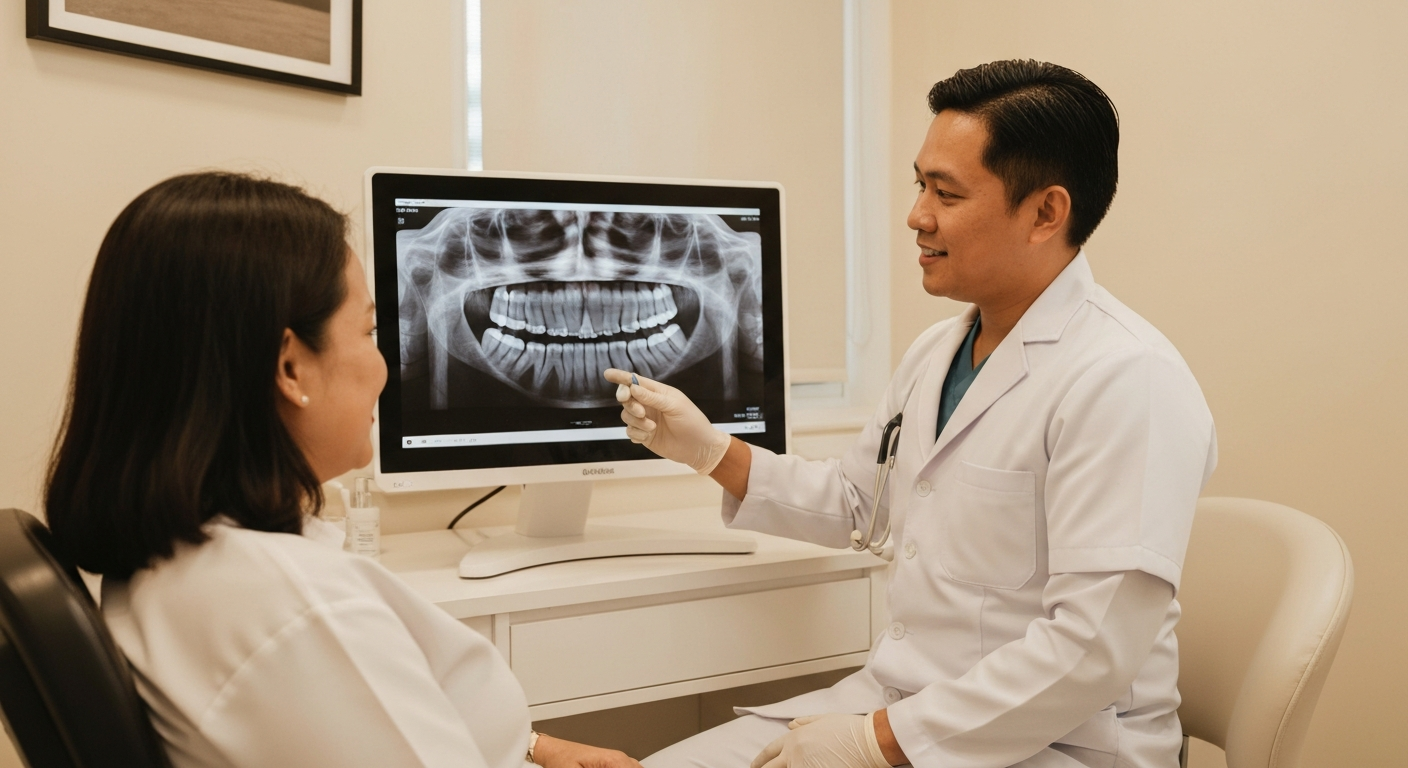
Quick Answer: Implant surgery is planned around your medical history as much as around your jaw. Anticoagulants, diabetes and how well it is controlled, bisphosphonates and other bone-modifying drugs, smoking, past radiotherapy to the head or neck, immunosuppression, active gum disease and significant bone loss all change how a clinic plans — and sometimes whether it operates at all. None is an automatic no. But every one has to reach the clinic in writing before you book flights, because a history handed over at reception on day one arrives too late to change the quote, the schedule or the ticket.
This page describes what clinicians assess and why it changes your planning. It does not tell you what your own situation means or what to do about it — that belongs to the doctor who manages your condition and the dentist who would operate.
Why your history has to reach the clinic before you fly
Because a plan built on incomplete information is a plan that changes once you are already in the country. Clinics quote from what you tell them. If a medication or a past treatment only surfaces at the first appointment, the realistic outcomes are a revised plan, a longer stay, a higher price, or a clinician declining to proceed — with your flights paid for and your return date fixed.
Send a full medical history, a complete current medication list with doses (including over-the-counter drugs and supplements), allergies, and details of any past head and neck surgery or radiotherapy. Add contact details for the doctors who manage any ongoing condition, because the clinic may need to write to them. Our guide to sending your dental records covers getting X-rays and notes out of your existing dentist.
Anticoagulants and antiplatelet medication
Implant placement is surgery in tissue that bleeds, so the clinic needs to know precisely what you take and why. That means the drug name rather than the category: warfarin, a direct oral anticoagulant such as apixaban, rivaroxaban, edoxaban or dabigatran, or an antiplatelet such as aspirin, clopidogrel or ticagrelor. They will also want the dose, how long you have taken it, the condition it was prescribed for, and — for warfarin — recent INR results and who monitors them.
It matters because bleeding control shapes the plan: how much surgery happens in one visit, whether the case is staged across appointments, what local measures are prepared in advance, and whether the prescribing doctor is consulted first. Published dental guidance on treating patients taking these drugs exists precisely because the answer is not the same for every drug or every patient.
Never stop, pause or adjust this medication on your own. That decision sits with the doctor who prescribed it, not with a dentist, a clinic coordinator, or this page.
Diabetes and glycaemic control
Diabetes is not a footnote on the form — it is a planning input the surgical team wants in detail. They will ask which type, how long you have had it, what you take (tablets, insulin, or newer injectables), your most recent HbA1c and the date it was measured, and whether you have complications such as neuropathy or kidney involvement. Recent bloods carry more weight than a number from two years ago.
Blood glucose control affects wound healing and infection risk, so it influences how surgery is scheduled, how closely you are reviewed afterwards, and sometimes whether the case is staged. Travel adds a complication that clinics abroad think about: long flights, time-zone shifts, unfamiliar food and a disrupted routine sit on top of a condition you normally manage at home. Whether your control is adequate for surgery is a judgement your own physician and the operating clinician make together.
Bisphosphonates and other bone-modifying drugs
Bone-modifying drugs are the ones to flag earliest, because they act on bone and implants are placed into bone. The group includes bisphosphonates such as alendronate, risedronate and zoledronic acid, the RANK-ligand inhibitor denosumab, and some antiangiogenic drugs used in cancer care. They are prescribed for osteoporosis and for certain cancers, and those two situations involve different doses and different routes.
The clinic needs the drug name, whether you took it by mouth or by infusion or injection, when you started, whether you are still taking it, and what it was prescribed for. This class is associated with medication-related osteonecrosis of the jaw, a recognised condition that professional bodies have published position papers on, and that association is why extractions and implant placement get assessed differently in people who have taken them. What follows from your history is a decision for your prescribing physician and the surgeon, together.
Smoking and vaping
Tell the clinic honestly how much you smoke or vape and for how long, because it is a factor in soft-tissue healing and therefore in surgical planning. Clinics differ in how they handle it: some decline implant surgery for current smokers, some proceed with a modified plan, some proceed with different consent wording and a closer review schedule. That variation is between clinics rather than between countries, and it is a fair question to ask before you pay a deposit.
Understating it does not help you. The plan, the healing expectations and the warranty conditions are all built on what you declare, and some warranties limit cover where smoking is involved — worth reading before you sign. What you choose to do about smoking around the time of surgery is a conversation with your own clinician.
Radiotherapy to the head and neck
Radiotherapy to the head or neck needs specifics on the form, not a yes. The assessing clinician will want the radiation dose in Gray, which fields were treated, whether your upper or lower jaw sat inside those fields, the dates of treatment, and contact details for the oncology team that managed it. Any past jaw surgery belongs in the same disclosure.
Bone that has been in a radiation field behaves differently under surgery, and osteoradionecrosis of the jaw is a recognised complication the specialty literature deals with directly. Assessment here can involve a maxillofacial surgeon or the oncology team rather than a general dentist alone, and it is not a judgement that can be made from photographs and an email. If this describes you, the honest reading of our own advice is that follow-up access should decide where you are treated.
Immunosuppression
Any medication or condition that suppresses the immune system belongs on the form, and the clinic needs the full list rather than a summary. That covers transplant anti-rejection drugs such as tacrolimus, ciclosporin and mycophenolate; long-term corticosteroids; biologics used for rheumatoid arthritis, inflammatory bowel disease and psoriasis; chemotherapy, past or ongoing; and HIV treatment. Doses and duration matter, as do recent blood results.
It affects planning because infection risk and healing are central to implant surgery, and because timing may need to fit around treatment cycles or dosing schedules rather than around your flight availability. Clinics may also need to correspond with the specialist who manages the condition before agreeing a date. That takes time, which is another reason the information has to arrive weeks before a booking.
Uncontrolled gum disease
Periodontal health is assessed as part of implant planning, not separately from it, because an implant goes into the same bone and gum that periodontal disease affects. The clinician looks at pocket depths, bleeding on probing, bone levels on radiographs, plaque control and whether the disease is stable or active. Existing teeth that are periodontally involved form part of that picture.
It matters because the tissues around an implant can develop their own inflammatory disease, peri-implantitis, which is a defined condition in the current international classification of periodontal and peri-implant diseases. Sequencing — what gets treated, in what order, and how long the gap is — is a clinical judgement about your mouth, and it can add appointments to a trip you had planned around one procedure. Our guides to gum disease treatment in the Philippines and peri-implantitis after dental tourism cover both ends of that.
Significant bone loss
Bone volume is assessed from imaging, which is why a clinic should want a panoramic X-ray and usually a CBCT scan rather than photographs. The clinician is looking at ridge height and width, where the maxillary sinus sits, where the inferior alveolar nerve runs, and the quality of the bone that is there. Long-standing missing teeth, previous extractions and past periodontal disease all shape what they find.
For planning, the consequence is time rather than a simple yes or no. Where grafting or a sinus lift is needed, healing periods sit between the stages, and that can turn a two-trip case into a three-trip one — with the extra flights landing on you, not the clinic. Bone grafting and sinus lifts explains how that reshapes a schedule. If a quote arrived without imaging, treat its timeline as provisional.
a clinic that does not ask about any of this before quoting you is telling you something about how it works. The medical history questionnaire, the medication list and the request for your records are not bureaucracy — they are the parts of the process that decide whether the surgical plan is real. A quote issued off a few photographs and a WhatsApp message has not assessed you; it has priced you. If the questions only start once you are sitting in the chair with a return flight booked, you have lost the ability to walk away cheaply.
Why these cases are the clearest argument for treating close to home
Because everything on this list raises the chance of needing an unscheduled visit, and unscheduled visits are the one thing dental tourism handles badly. A complication that means two extra appointments is an inconvenience when your surgeon is across town. It is a flight, a hotel and time off work when the surgeon is on the other side of the world, and that cost lands on top of whatever you saved.
The second reason has nothing to do with distance. These cases need coordination between a dentist and the doctors who manage your other conditions, and that is easier between clinicians in the same health system, writing in the same language, with access to the same records. This is the category where the answer tilts hardest towards staying put, whatever the price gap.
Talk to your own doctors first
Nothing here is a diagnosis, a clearance, or a reason to change anything you are taking. The two people who can answer the question for your case are the physician who manages your condition and the dentist or surgeon who would place the implants — and they need to have spoken to each other before you book. Get that review done before the travel money is committed. Ask any clinic whether they will correspond with your doctors, and what happens to the plan, the timeline and the deposit if the day-one examination changes the assessment. A second opinion before you fly is worth more on a complex history than on a straightforward case, because what two clinicians disagree about is usually exactly the things listed above. If a clinic tells you none of that is necessary, that is information about the clinic.
Before you book
Start with sending your dental records so anyone quoting you is assessing the real picture, work through our questions to ask a clinic abroad with the medical ones at the top rather than after the price, then read the dental tourism guide for the wider case on when flying makes sense and when it does not. If you want clinics that take a complex history seriously, tell us the details on the enquiry form and we will match you against our verified clinics.
Sources
- Anticoagulant and antiplatelet management in dental patients: Scottish Dental Clinical Effectiveness Programme (SDCEP), Management of Dental Patients Taking Anticoagulants or Antiplatelet Drugs — sdcep.org.uk. We reference that this guidance exists and what it covers; we do not reproduce its clinical recommendations, which are written for clinicians.
- Medication-related osteonecrosis of the jaw (MRONJ): position papers from the American Association of Oral and Maxillofacial Surgeons — aaoms.org — and oral health topic material from the American Dental Association — ada.org. Named as a recognised condition associated with bone-modifying drugs; no incidence or risk figure is given, because we have not sourced one.
- Oral management of patients treated with radiotherapy, chemotherapy or bone marrow transplantation: Faculty of Dental Surgery, Royal College of Surgeons of England — rcseng.ac.uk. Osteoradionecrosis is named as a recognised complication; again, no rate is stated.
- Peri-implantitis as a defined condition: the 2017 World Workshop classification of periodontal and peri-implant diseases and conditions, published jointly by the American Academy of Periodontology and the European Federation of Periodontology.
- HbA1c as the standard measure of longer-term glycaemic control: general diabetes-care practice, not a single citable document.
- Smoking as a factor in healing, and the relevance of diabetes control, immunosuppression, periodontal status and bone volume to implant planning: general clinical practice and professional consensus rather than one citable source. We state that clinicians assess these factors; we make no claim about how much any of them changes an outcome, because we have not sourced figures.
- Which drugs clinics ask about, how clinics differ on treating smokers, and warranty wording that limits cover: general market practice seen across clinic documentation, not a published study. Confirm specifics with the clinic in writing.
- Whether a given clinic requires imaging or will correspond with your physician: varies by clinic. See how we verify for what we check before listing one.
FAQ
Can I get dental implants if I take blood thinners?
That is a question for the clinician who will operate and the doctor who prescribed the medication, working together. What we can tell you is what they need: the exact drug name, the dose, why it was prescribed, how long you have been on it, and recent blood results if you have them. Never adjust or stop anticoagulant or antiplatelet medication on your own reading of a web page.
Does diabetes rule out dental implants?
Not automatically, but it is a central part of the assessment rather than a footnote. The surgical team will want to know the type, how long you have had it, what you take for it, your most recent HbA1c and when it was measured, and whether you have related complications. Glycaemic control is treated as a planning input, not a yes-or-no gate, and the decision belongs to your clinicians.
Why do dentists ask about bisphosphonates and osteoporosis drugs?
Because bone-modifying drugs such as alendronate, risedronate, zoledronic acid and denosumab change how the jaw responds to surgery, and are associated with medication-related osteonecrosis of the jaw. The clinic needs the drug name, whether it was taken by mouth or by infusion, the start and stop dates, and what it was prescribed for. Osteoporosis and cancer dosing are not the same situation.
Will a clinic refuse to place implants if I smoke?
Some will, some will place with a different plan or different consent wording, and practice varies between clinics rather than between countries. What matters for your planning is that you tell them honestly how much you smoke or vape and for how long, because it affects soft-tissue healing and the surgical approach. What you do about it is a conversation with your own clinician.
Can I have implants after radiotherapy to the head or neck?
It is possible in some cases and not in others, and it is one of the few situations where the assessment usually involves a maxillofacial or oncology team as well as a dentist. They need the radiation dose, which fields were treated, whether your jaws were inside them, and the dates. This is a case where we would tell most readers to be treated close to home.
What medical information should I send a clinic abroad before booking?
A full medical history, a complete current medication list including doses and over-the-counter items, allergies, past head and neck surgery or radiotherapy, your dentist's recent X-rays or CBCT scan, and contact details for the doctors who manage any ongoing condition. Send it before you book flights, not on arrival, so the plan you are quoted is the plan that survives an examination.
Does gum disease have to be treated before implants?
Periodontal health is assessed as part of implant planning, and the tissues around an implant can develop their own inflammatory disease called peri-implantitis. Clinics generally look at pocket depths, bleeding, bone levels on radiographs and how stable the disease is before committing to a surgical plan. Whether yours needs treating first, and in what order, is a clinical judgement about your mouth.
When should I treat at home instead of flying?
When follow-up access matters more than price. Complex medical histories tend to need unscheduled visits, coordination with the doctors who manage your other conditions, and a surgeon who can see you at short notice. None of that survives a long-haul flight well. The saving has to be weighed against how expensive and difficult a complication becomes at a distance.
This is general information, not medical advice. Smile Philippines is an independent directory and guide, not a dental provider. Prices are indicative ranges — confirm the current price and your treatment plan directly with a licensed dentist. See our full disclaimer.

Want clinic recommendations + a quote?
Tell us what you need — we'll match you with 2–3 verified clinics and reply within 48 hours.
Get a Free Quote →