E.max Crowns in the Philippines: Cost, Strengths and When to Say No
Quick Answer: An e.max crown costs ₱15,000–₱25,000 (about US$247–$411) per tooth in the Philippines, verified June 2026. E.max is lithium disilicate — a glass-ceramic with no metal core, which is why it looks like a real tooth. Zirconia sits in exactly the same ₱15,000–₱25,000 band here, so you are not paying a premium for either. Choose on the tooth and your bite: e.max for visible front teeth, zirconia where the load is heavy or the space is tight.
Patients arrive at this decision expecting the better-looking ceramic to be the dearer one, and treat the choice as a budget question. In the Philippines that framing breaks down, because the two leading ceramics are priced the same. This page is about what actually separates them, and about the cases where e.max is the wrong answer regardless of how good it looks.
What e.max actually is
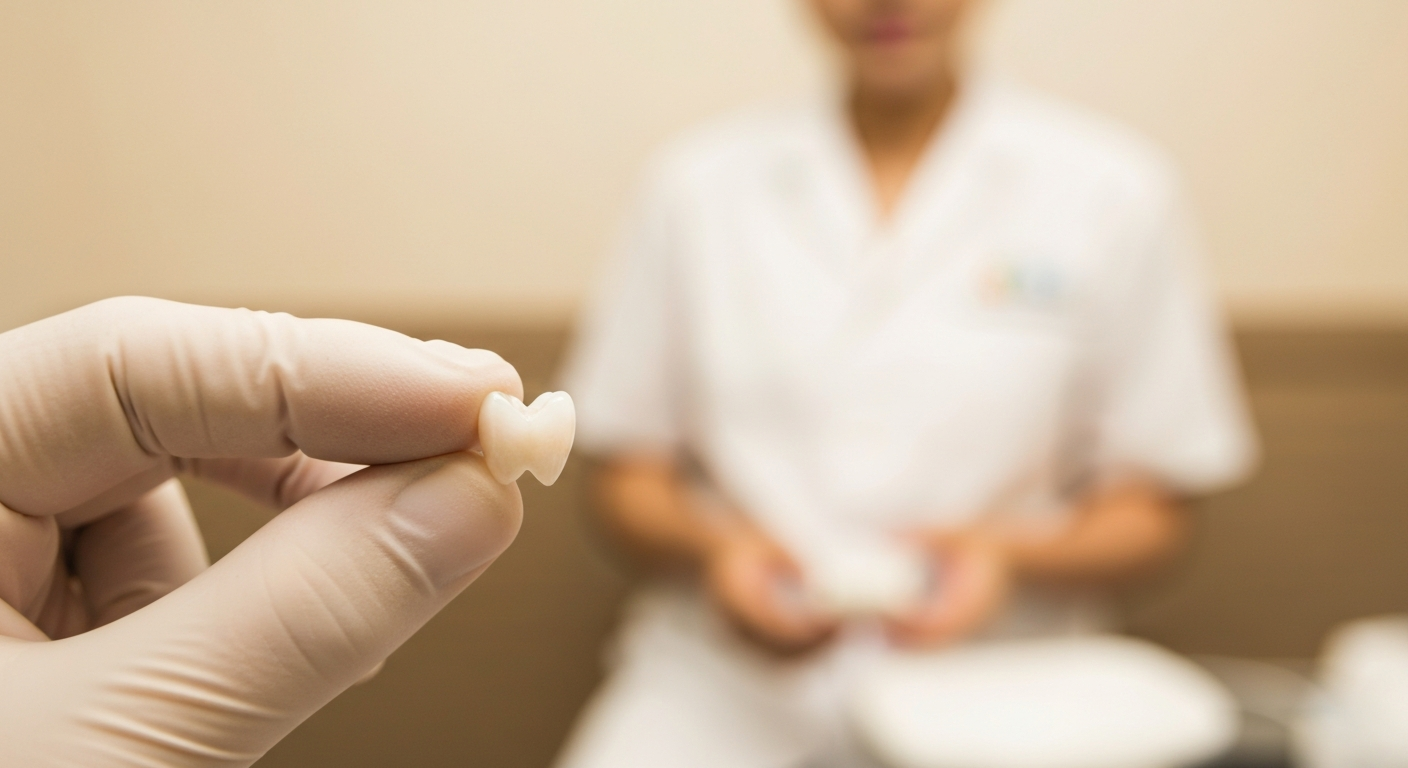
E.max is lithium disilicate, a glass-ceramic made in a single homogeneous block with no metal substructure and no opaque core underneath. That construction is the whole point: light travels into the material and scatters the way it does in natural enamel, instead of stopping at a hidden layer. The name itself is a brand — IPS e.max is manufactured by Ivoclar Vivadent — and other companies make lithium disilicate under their own names, which is worth knowing when you read a quote. It is supplied to laboratories either as ingots that get hot-pressed, or as machinable blocks that arrive in a soft blue-violet state and change colour when they are fired. Both routes end in the same material. Ask which one your clinic’s lab uses and whether the crown is genuine e.max or a generic lithium disilicate, in the same way you would ask an implant clinic to name the brand.
What e.max costs in the Philippines
An e.max crown runs ₱15,000–₱25,000 per tooth in our June 2026 clinic research, which is the same band as zirconia and slightly above conventional all-ceramic.
| Crown material | Philippines | USA | You save |
|---|---|---|---|
| E.max (lithium disilicate) | ₱15,000–₱25,000 ($247–$411) | no sourced figure | — |
| Zirconia | ₱15,000–₱25,000 ($247–$411) | no sourced figure | — |
| Full porcelain / all-ceramic | ₱12,000–₱20,000 ($197–$329) | no sourced figure | — |
E.max (lithium disilicate)
Zirconia
Full porcelain / all-ceramic
Philippine prices verified June 2026 from named clinics (how we verify). We do not hold a sourced per-material US figure for e.max specifically, so we leave that column empty rather than quote one; the crown cost hub has the Western crown averages we can source. The top of the zirconia band rises at premium Manila clinics using imported multi-layered blocks. Conversions at ₱60.79 = US$1.
because e.max and zirconia cost the same here, the usual patient shortcut — “the pricier one must be better” — gives you nothing. Some clinics will still present e.max as the upgrade, because that is how the two ceramics are often positioned elsewhere. Push back and ask the clinical question instead: which tooth is it, how much load does it take, how much room is there, and do you grind. If the answer comes back as a price argument rather than a bite argument, you are being sold to.
Why e.max suits front teeth
Front teeth are judged on appearance, and appearance in a crown is mostly about how light behaves at the edge. Lithium disilicate is translucent, so the incisal edge picks up shade from what is behind and beside it instead of ending in a flat wall of white. It also takes a cut-back and a hand-layered veneering ceramic well, which lets a technician build in the subtle variation a real incisor has. A single upper front tooth sitting beside untouched natural neighbours is an unforgiving case, and translucency is what makes it survivable. If several front teeth are involved, the material sits alongside the questions covered in crowns versus veneers — the shade and shape decisions matter more than the ceramic name.
Where e.max is the wrong choice
There are cases where the aesthetic argument loses, and it is better to hear them before a clinic quotes you. Heavy bite forces are the main one: molars take far more load than incisors, and lithium disilicate is the less tough of the two ceramics. Grinding and clenching push in the same direction, and so does a tooth that has been prepared conservatively, because the material needs enough thickness to do its job. Long bridges are a separate limit — e.max is primarily a single-unit material and manufacturers restrict its bridge indications, so a multi-unit span is normally zirconia or metal-backed work. None of this means e.max never goes on a back tooth; it means the decision belongs to the dentist who has examined your bite and seen your scans, not to a comparison table.
E.max versus zirconia, decided properly
Since the price is identical, the choice is a straight trade of translucency against toughness. Zirconia is the stronger material and copes better with load and with thin preparations; modern multi-layered zirconia has narrowed the appearance gap, though it starts from a more opaque base. E.max gives you the more convincing result where a tooth is on show and light passes through it. A common outcome is a mix in one mouth — lithium disilicate on the visible upper front teeth, zirconia further back where nobody sees it and the chewing happens. That is not a compromise, it is the material doing what it is good at. Whatever you agree, get the material written on the treatment plan per tooth, not as a single line covering the whole case.
How the crown is made
Understanding fabrication tells you what to ask about. The tooth is prepared, then captured with an impression or an intraoral scan, and a temporary crown protects it while the laboratory works. The lab either presses molten ingots into a mould made from a wax pattern, or mills the crown from a block and fires it to full strength and final shade. From there it can be finished as a full-contour crown with stain and glaze, or cut back and hand-layered with veneering ceramic for extra depth on a front tooth. At the fitting appointment lithium disilicate is normally bonded with a resin cement after the fitting surface is etched and treated, rather than seated with a conventional cement, so a dry, well-isolated field matters. If your trip is short, read the treatment timeline before you fix return flights.
What to ask a Philippine clinic
Ask these on the video call, before any deposit. Is the crown genuine IPS e.max or a generic lithium disilicate, and which laboratory makes it? Is it pressed or milled, full-contour or layered? Is the quote per tooth, and what is excluded — the scan or X-ray, the temporary, any core build-up, any root canal underneath? Which cement will be used at fitting? What warranty covers the crown, for how long, and who pays if it needs remaking after you fly home? Will they do a shade match in daylight rather than under a surgery lamp? A clinic that answers all of that in writing is telling you something useful about how it works. The wider checklist is in questions to ask a clinic abroad.
Before you book
Start with the crown cost hub for how crowns compare with Western prices, check whether the tooth needs a root canal first, and price everything else on the 2026 Philippine price list. Remember the arithmetic from the dental tourism guide: one crown does not pay for a long-haul flight, so this only makes sense bundled with other work or done while you are already in the country. When you have a case worth quoting, send it through the enquiry form and we will match you with verified clinics.
Sources
- Philippine prices (e.max ₱15,000–₱25,000; zirconia ₱15,000–₱25,000; full porcelain ₱12,000–₱20,000, per tooth): named-clinic price research by the team behind ClinicFinderPH, verified June 2026 — how we verify.
- Western per-material crown prices: we hold no sourced figure for an e.max crown specifically in the US, UK, Australia or elsewhere, which is why the comparison column is left empty. The general crown averages we can source are cited on the crown cost hub.
- IPS e.max as a brand: IPS e.max is a lithium disilicate product line manufactured by Ivoclar Vivadent; other manufacturers produce lithium disilicate under their own names. Stated as market fact, not an endorsement.
- Material behaviour (translucency, relative toughness, bridge-span limits, adhesive bonding of lithium disilicate): general material and laboratory practice as described by manufacturers and dental laboratories. We deliberately quote no strength figures here, because we have no single citable source we are willing to stand behind.
- Which material suits which tooth: general clinical practice, not a citable document and not advice. The decision depends on your bite, remaining tooth structure and grinding habits, and belongs to the dentist examining you.
- Exchange rate (₱60.79 = US$1, mid-market): ECB via Frankfurter, 12 June 2026. Confirm before you pay.
FAQ
How much does an e.max crown cost in the Philippines?
₱15,000–₱25,000 per tooth, about US$247–$411 at ₱60.79 = US$1, verified June 2026 from named clinics. That band covers the crown itself. Preparation appointments, a scan or X-ray, and any root canal or build-up underneath are quoted separately, so ask for an itemised total rather than a per-crown headline price.
Is e.max better than zirconia?
Neither is better in general — they are good at different things. Lithium disilicate is more translucent, so it reads as a natural tooth more easily, which is why it is the usual pick for visible front teeth. Zirconia is the tougher material and handles heavy chewing load and thinner clearance better. The tooth position and your bite decide it.
Do e.max crowns cost more than zirconia in the Philippines?
No. Both sit in the same ₱15,000–₱25,000 band in our June 2026 clinic research, so price is not a tiebreaker here the way it can be in Western markets. That is genuinely useful: you can choose on clinical grounds instead of budget. If a clinic quotes a large gap between the two, ask what is driving it.
Can e.max be used on back teeth?
It is used on premolars and molars, but it is the material that gets challenged there — molars carry the heaviest bite forces and often leave less room for thickness. Whether it suits your particular molar depends on your bite, how much tooth is left and whether you grind. That is a judgement for the dentist examining you, not a rule you can apply from a web page.
What is e.max actually made of?
Lithium disilicate, a glass-ceramic. It contains no metal substructure and no opaque core, which is why light passes through it in a way that resembles enamel. IPS e.max is a brand name owned by Ivoclar Vivadent; other manufacturers make lithium disilicate too, so ask whether your quote covers genuine e.max or a generic equivalent.
How many visits does an e.max crown take?
Usually two: one to prepare the tooth and take an impression or digital scan, one to try in, adjust and bond the finished crown once the lab has made it. Some Philippine clinics mill lithium disilicate chairside and can finish in a single longer appointment. Confirm which applies before you book flights.
Are e.max crowns glued in differently?
Yes. Lithium disilicate is normally bonded adhesively with a resin cement after the fitting surface is etched and treated, rather than seated with a conventional cement. That bond is part of the restoration's strength, which makes an isolated, dry field at fitting matter. It is worth asking what cement the clinic uses and why.
Can I get an e.max bridge in the Philippines?
Short spans, sometimes. Lithium disilicate is primarily a single-unit material and manufacturers limit its bridge indications; longer bridges are normally made in zirconia or with a metal substructure. If a clinic offers a long-span e.max bridge, ask them to put the material and the span in writing and explain the reasoning.
This is general information, not medical advice. Smile Philippines is an independent directory and guide, not a dental provider. Prices are indicative ranges, verified June 2026 — confirm the current price and your treatment plan directly with a licensed dentist. See our full disclaimer.
Want clinic recommendations + a quote?
Tell us what you need — we'll match you with 2–3 verified clinics and reply within 48 hours.
Get a Free Quote →